
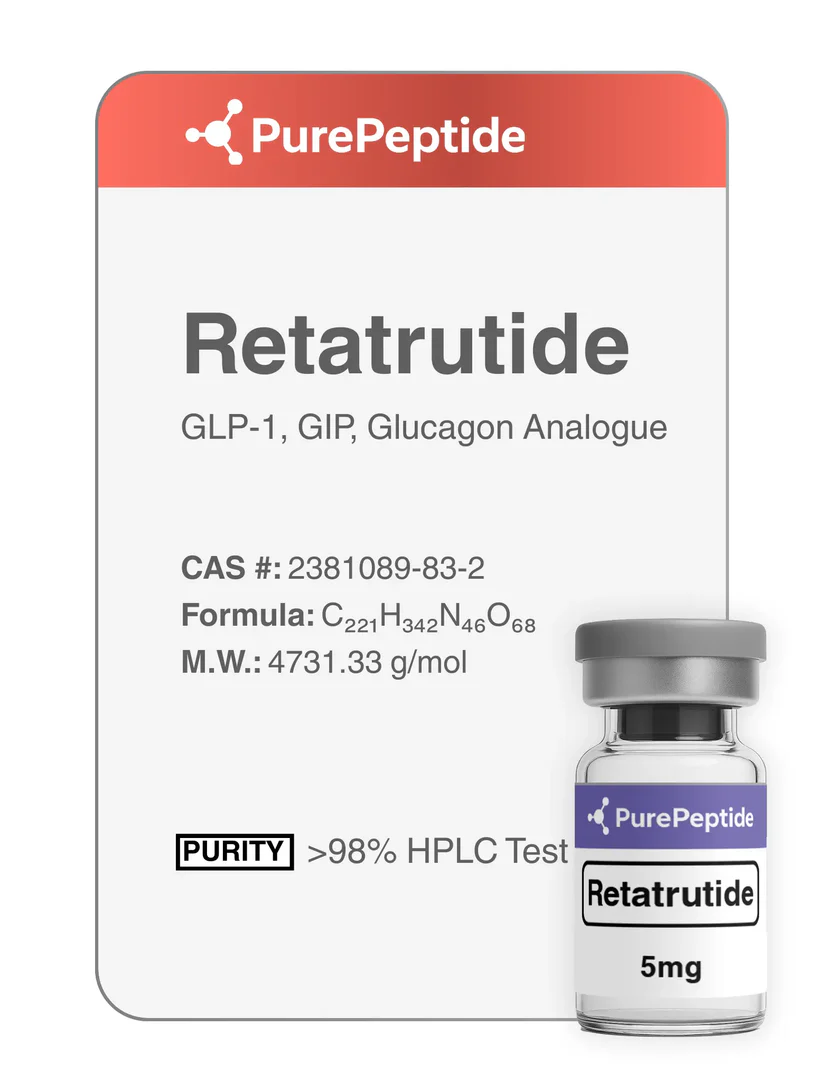


Retatrutide 5mg/10mg/30mg
$57.00
What is Retatrutide?
Retatrutide is a peptide analog consisting of 42 amino acids, which is a subject of scientific interest mainly in the field of metabolic regulation. A distinctive feature of the molecule is its triple receptor profile – interaction with GLP-1 (glucagon-like peptide-1), GIP (glucose-dependent insulinotropic polypeptide) and glucagon receptors. This combined activity distinguishes it from classic GLP-1 analogs and places it among the more extensively studied incretin compounds.
In scientific literature, Retatrutide is primarily discussed in relation to obesity, type 2 diabetes, and other metabolic conditions. Published clinical data describe changes in body weight, glycemic control, and various cardiometabolic indicators in observed participant groups.
Observations and Data on Retatrutide
Available publications examine Retatrutide in several main areas related to metabolic function, energy balance, and appetite regulation:
- Glucose control – clinical studies have described tendencies towards a reduction in HbA1c and an improvement in insulin sensitivity in some participants.
- Weight reduction – published results show a significant reduction in body weight and fat mass, with effects being more pronounced in some protocols compared to compounds with a dual receptor mechanism.
- Hepatic metabolism – individual studies have reported changes in hepatic steatosis, as well as improvements in some lipid profile indicators.
- Cardiometabolic markers – changes in triglycerides, systolic blood pressure, and certain inflammatory markers have been described.
- Energy expenditure – experimental models suggest a possible influence on energy expenditure, utilization of fat stores, and mechanisms related to appetite.
Administration and Dosage
Scientific publications most often describe subcutaneous administration once weekly. Various research protocols use gradual titration, with initial doses often starting at 2 mg weekly and subsequently increasing according to tolerability and observed results.
When dissolving 5 mg with 2 ml bacteriostatic water:
The resulting concentration is 2.5 mg/ml, meaning 0.4 ml contains 1 mg.
Approximate values:
0.1 ml = 0.25 mg
0.2 ml = 0.5 mg
0.3 ml = 0.75 mg
0.4 ml = 1 mg
0.5 ml = 1.25 mg
When dissolving 10 mg with 2 ml bacteriostatic water:
The resulting concentration is 5 mg/ml, meaning 0.2 ml contains 1 mg.
Approximate values:
0.1 ml = 0.5 mg
0.2 ml = 1 mg
0.3 ml = 1.5 mg
0.4 ml = 2 mg
0.5 ml = 2.5 mg
Scientific Publications
Retatrutide has also been studied in the TRIUMPH-4 clinical trial, phase 3, conducted over 68 weeks in participants with obesity or overweight and concomitant knee osteoarthritis, without diagnosed diabetes.
According to the published results, the following trends were observed during the study:
- Average body weight reduction of approximately 28.7% by week 68 in the 12 mg dose group.
- Significant reduction in pain according to the WOMAC scale, combined with improvement in physical function and daily activity.
- Favorable changes in non-HDL cholesterol, triglycerides, hsCRP, and systolic blood pressure at higher dose regimens.
Possible Side Effects
The most commonly described adverse reactions in scientific literature are related to the gastrointestinal system.
These are typically dose-dependent and may include:
-
nausea, vomiting, diarrhea, or constipation
-
decreased appetite
-
bloating, feeling of heaviness, and abdominal discomfort
Less frequently, publications also discuss potentially more serious risks, including:
-
cholelithiasis, especially with rapid body weight reduction
-
hypoglycemia when combined with antidiabetic therapies







Reviews
There are no reviews yet.